

How I Managed Typing Pain While Learning Touch Typing
When I was learning touch typing, I expected slow speed and mistakes. I did not expect the amount of hand and finger pain I experienced. At one point, ordinary tasks such as holding food became difficult. I eventually stopped practice for a period, returned more carefully, and after I became comfortable with typing that same problem did not recur for me. This is my experience—not proof that severe pain is normal, safe, or caused by the same thing in everyone.
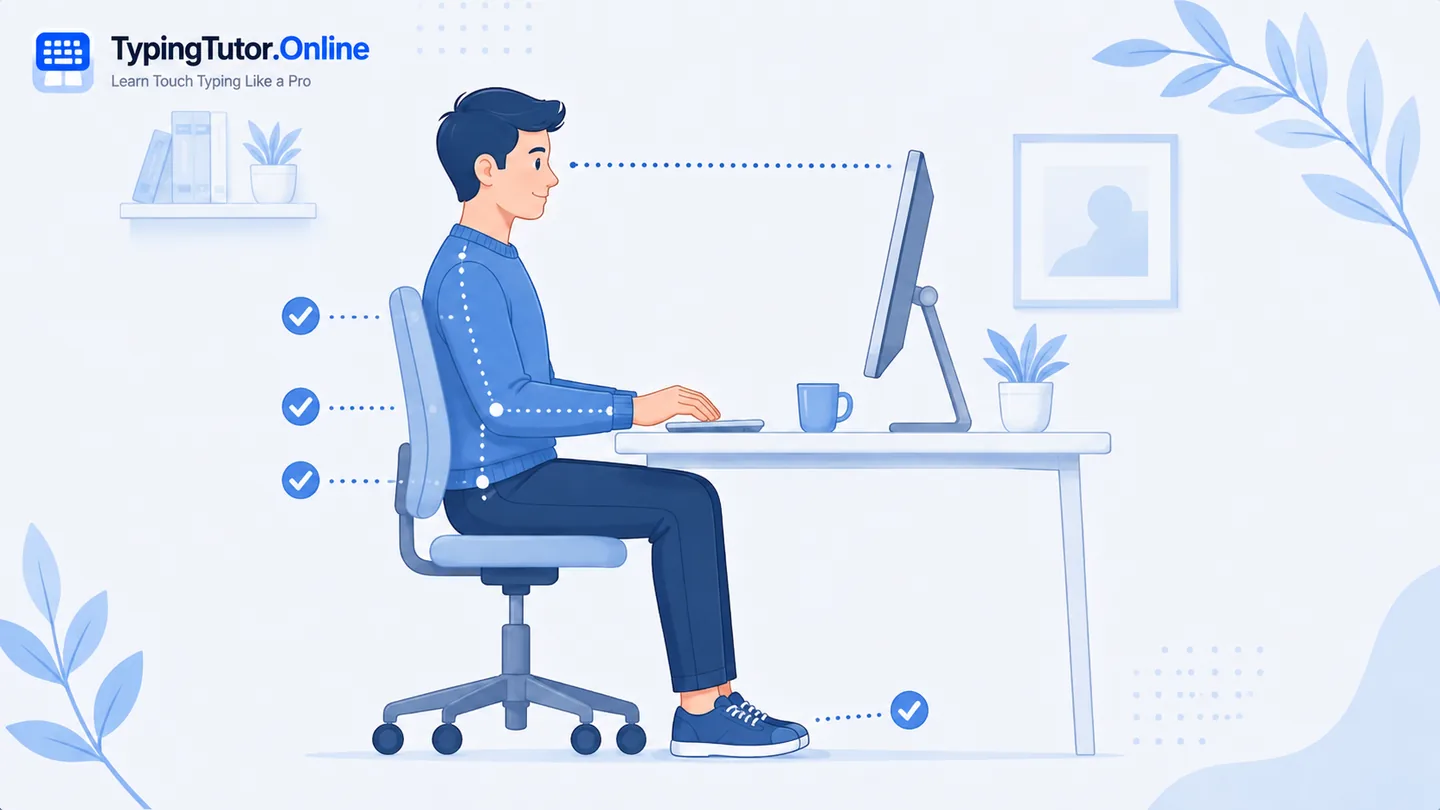
If pain interferes with gripping, eating, sleeping, work, or normal hand use, stop and seek medical advice. Difficulty holding things is a warning sign, not a training target.
What surprised me when I started
I was trying to teach my fingers a completely new pattern. Instead of searching for keys, I wanted every finger to learn its own area and return to the home row. Because I was focused on improvement, I did more repetitive practice than my hands were used to. The pain became much more than the mild tiredness I had expected.
I remember periods when the discomfort lasted for weeks. There were days when using my hands for ordinary tasks felt difficult. I took a break from learning because continuing no longer made sense.
The mistake I would avoid now: treating discomfort as a challenge
When you are motivated, it is easy to think that a difficult practice session must be productive. But typing is a coordination skill. You do not earn extra skill simply by keeping the timer running while your hands hurt. In hindsight, stopping earlier and reducing the amount of continuous repetition would have been the better approach.
What changed after I learned touch typing
After I eventually became comfortable with touch typing, that same episode did not recur for me. My own interpretation is that the movement became more familiar and less tense, but I cannot say exactly what caused the earlier pain. That is why the health articles on TypingTutor.Online avoid diagnosing “typing pain.” There are many possible causes of hand and finger symptoms.
How that experience influenced TypingTutor.Online
- Short lesson options: beginners do not need to prove themselves with long sessions.
- Accuracy before speed: fast tense typing is not the goal.
- Inactivity protection: idle time should not silently count as real practice.
- Pause and restart controls: stopping a session is always acceptable.
- Hand-position guidance: the tutor repeatedly encourages relaxed home-row technique.
- Progress based on activity: waiting out a timer cannot replace actual controlled practice.
What I would tell a beginner today
Start smaller than your motivation tells you to. Learn the key positions, type slowly enough to stay relaxed, and stop while the movement still feels clean. If you notice finger pain during typing, hand pain while typing, hand cramps, numbness, tingling, weakness, swelling, or difficulty holding things, do not treat that as a badge of commitment.
Why I still recommend touch typing
My difficult learning period did not change the value I found in the skill. Once learned, touch typing allowed me to focus more on the text and less on finding keys. But the path to that skill should be sensible. The objective is comfortable, repeatable keyboard use—not suffering through lessons.
A better beginner mindset
- Practise for skill, not for pain tolerance.
- Use light keystrokes.
- Keep wrists and shoulders relaxed.
- Split the daily goal into smaller sessions if needed.
- Stop when pain is increasing.
- Return only when ordinary hand use feels comfortable.
- Get medical advice for severe, persistent, neurologic, swollen, or function-limiting symptoms.
Questions I would have asked when I was learning
Does everyone get hand pain when learning touch typing?
No. Pain is not an expected requirement of learning, and many people learn without significant discomfort.
Did learning touch typing cure the pain?
I can only say that the same problem did not recur for me after I became comfortable with typing. That personal sequence does not prove a diagnosis or a cure.
Should I take a break if typing hurts?
Yes—stop the aggravating activity rather than forcing the session. If symptoms are severe, persistent, recurrent, or affect normal hand function, seek medical advice.
Sources and further reading
These references support the general ergonomics and symptom-safety guidance in this article.