

What Is a Good Typing Speed? Understanding WPM, Accuracy and Your Goal
A good typing speed is not one universal number. The useful target depends on what you type, how accurate you are, and whether the speed is sustainable for real work or study.
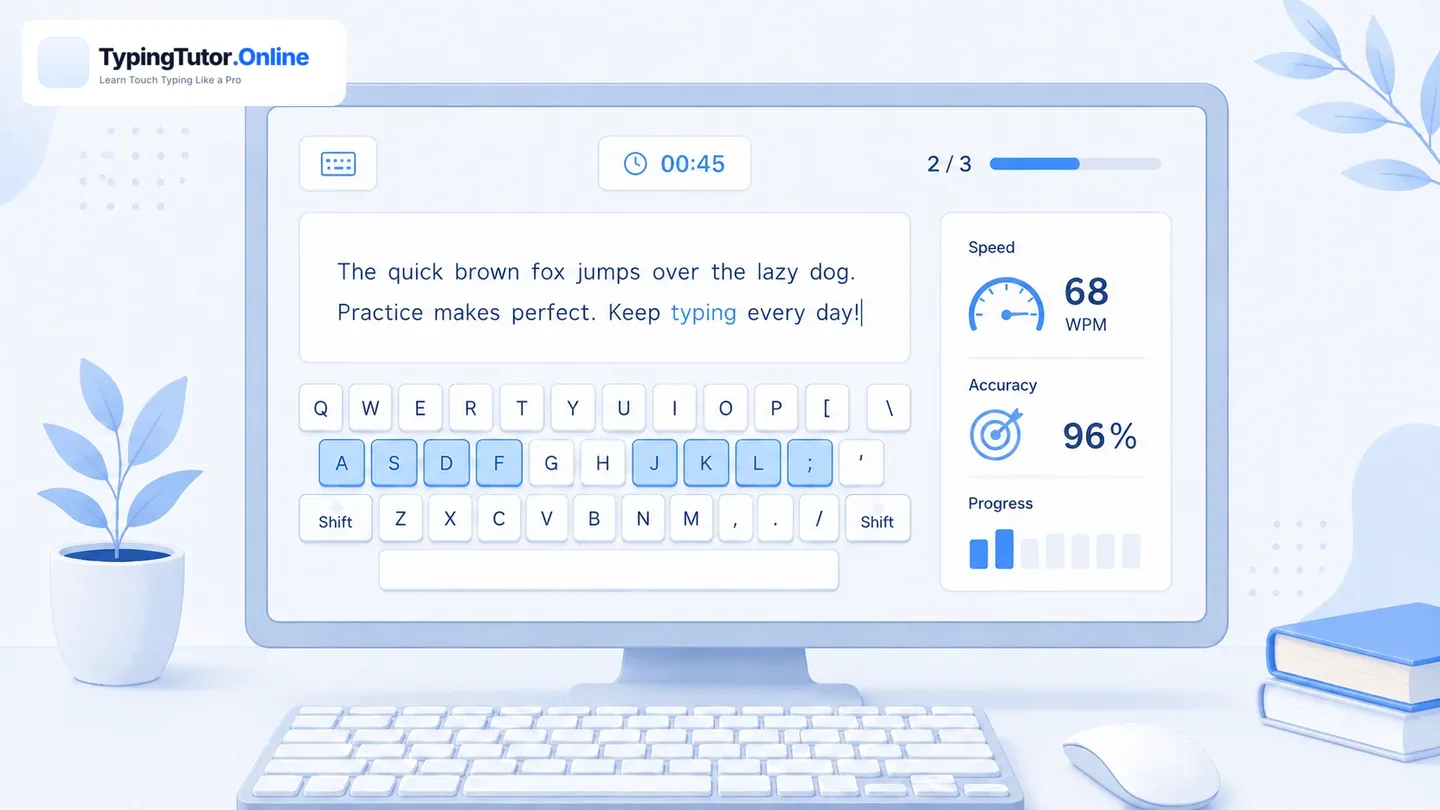
WPM is only one part of typing performance
Words per minute estimates how quickly you produce text, commonly using a standard five-character word. But a high WPM with frequent corrections may feel slower in real work than a slightly lower speed with strong accuracy.
What is a good typing speed for you?
Use your own baseline first. If you currently type 25 WPM at high accuracy, reaching a stable 30 or 35 WPM is meaningful progress. If you already type quickly, consistency and error reduction may matter more than another small speed increase.
Accuracy changes the meaning of WPM
Compare speed together with accuracy. A personal best should ideally represent both. If your speed rises while accuracy collapses, slow down and rebuild the movement pattern.
Take a free WPM test Use the WPM calculator
Different tasks need different speeds
Copy typing, programming, numeric entry, note-taking and creative writing place different demands on the keyboard. For numeric entry, keys per minute may be more intuitive than WPM. For writing, thinking time often matters more than raw keystroke speed.
See our research-based required typing speed guide for SSC CGL, SSC CHSL, RRB NTPC, data entry, chat support, call centers, virtual assistants and practical work targets.
How to improve a good speed into a reliable speed
Practise weak keys, use real words and paragraphs, and take tests of different durations. A speed that survives a longer test with similar accuracy is more useful than a brief burst that cannot be repeated.
Speed for beginners versus experienced typists
A beginner should judge progress against their own earlier results. Someone learning correct finger placement may temporarily type slower than they did with hunt-and-peck typing. That temporary drop can be worthwhile if accuracy and technique improve, because speed can grow from a stronger foundation later.
Use longer tests for a more stable picture
A one-minute burst is useful for quick feedback, but longer tests reduce the influence of one easy or difficult sentence. Compare one-, three-, five- and ten-minute results if you want to know whether your pace is sustainable.
What should you improve first?
If accuracy is below your normal level, improve accuracy first. If accuracy is already strong but speed is flat, look at weak keys, hesitation points and reading-ahead rhythm. If speed varies dramatically between tests, work on consistency rather than chasing the highest single result.
See Average Typing Speed: What Is the Average WPM? for the 168,000-person study, the 30–60 WPM range and a direct answer to whether 60 WPM is good.