Learn Typing in 10 Days: Free Beginner Practice Plan
Can you learn typing fast in 10 days? You can build a useful foundation in ten days, especially if you are starting from scratch, but complete touch-typing fluency takes different amounts of time for different people. This free plan gives each day one clear learning goal—not a guaranteed WPM score.
Before day 1: Prepare for comfortable typing
Read How to Learn Typing for laptop setup, correct finger placement and first-lesson instructions. Beginners usually benefit from brief sessions, relaxed shoulders, straight wrists and light key presses. The suggested daily practice windows below can be shortened or split into breaks.
Day-by-day: a ten-day typing practice schedule
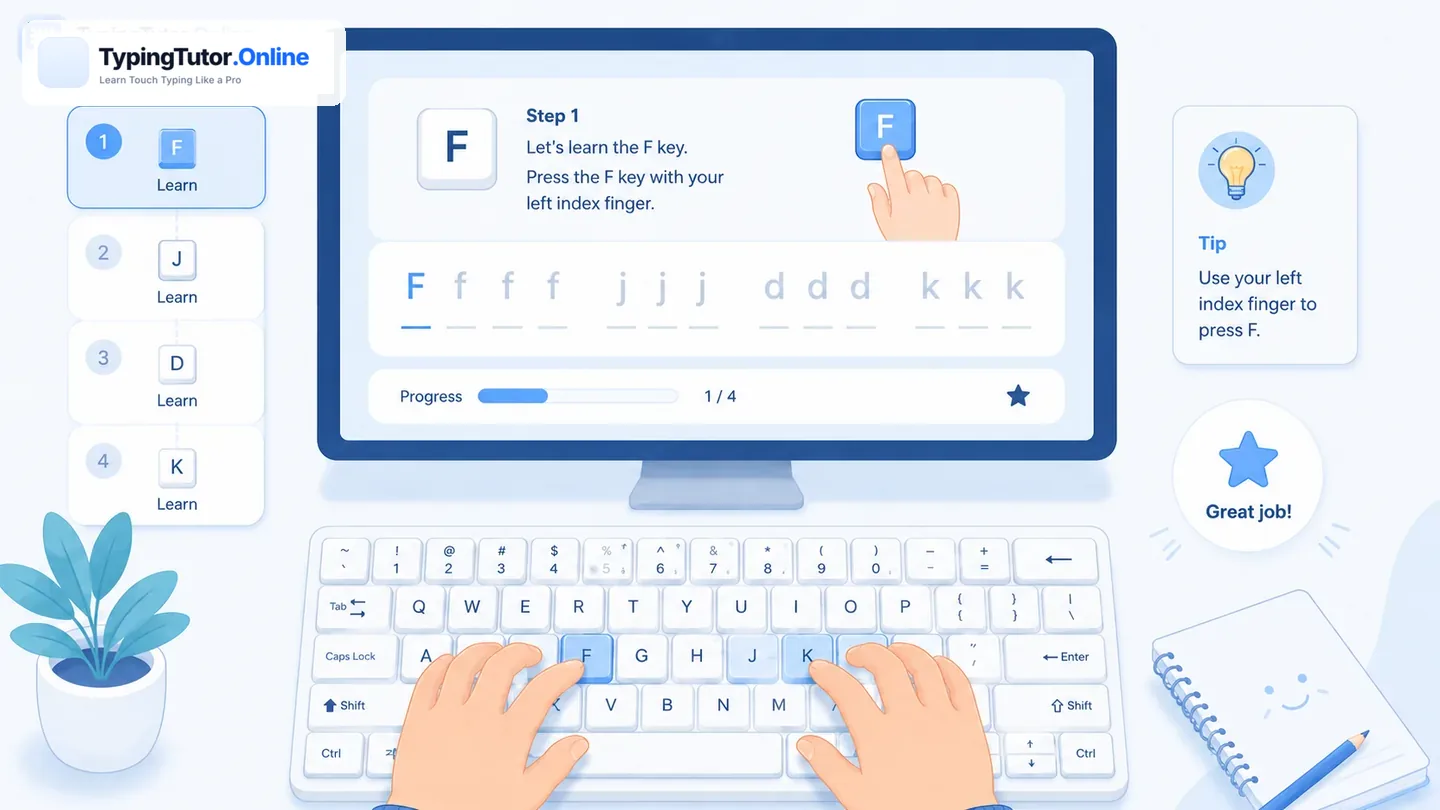
- Day 1 — Find F and J: Practise index-finger anchors, home-row posture and Space. Open lesson 1. Aim for controlled, gentle presses, not speed.
- Day 2 — Build the home row: Add the nearby home-row letters using the guided lessons. Repeat slow combinations until you can return to F and J.
- Day 3 — Type short home-row patterns: Mix previously learned letters. Keep your eyes on the text and note the keys that still make you hesitate.
- Day 4 — Begin top-row reaches: Practise only the top-row keys introduced by your current lesson. Combine them with earlier letters.
- Day 5 — Review and write short words: Stay with your current lesson level and practise small words using keys you have learned, rather than skipping ahead.
- Day 6 — Introduce bottom-row keys: If the earlier rows feel comfortable, learn a few bottom-row reaches. Otherwise, repeat days 3–5 until accurate.
- Day 7 — Shift and punctuation: Explore capitals with the opposite-hand Shift key and add commas or periods when your course reaches those keys. You can also use the 7-day printable starter plan.
- Day 8 — Type simple sentences: Focus on rhythm, spacing, accuracy and familiar words rather than trying to move faster.
- Day 9 — Practise weak keys: Use a short typing test if ready, identify difficult letter pairs, and use the Speed Improver.
- Day 10 — Retest and choose your next step: Compare WPM and accuracy with your earlier baseline; celebrate steadier, more accurate typing even if WPM has not risen yet. Continue the 60-lesson course and keep practising.
This is a starter schedule. If a lesson is difficult, stay on that day or repeat it. Correct finger use and accuracy are more useful than finishing the list in exactly ten calendar days.
How much practice time per day?
Start with a comfortable, short session—perhaps five to ten minutes. If your hands feel fine, extend gradually, with breaks as needed. Some people prefer two smaller sessions rather than one long session. The goal is deliberate practice without strain, not a fixed number of hours.
Finger fatigue, pain and everyday hand activities
It is possible to feel temporary tiredness when using unfamiliar finger movements. But pain, numbness, tingling or trouble gripping a tea or coffee cup or handling cutlery is a reason to stop and rest—not evidence that typing practice is working. Check your setup and seek healthcare advice if symptoms persist, recur or interfere with normal activity. There is no guarantee pain disappears permanently. See our beginner hand-strain guide.
Measure improvement without chasing a perfect score
Record a short baseline test and revisit it on day 10. Compare accuracy, WPM, hesitation, and how comfortable the typing feels. Improvement can be fewer mistakes and easier finger movement before a higher speed. Use the 30-day tracker for the month after this starter plan.

10-day typing questions
Can anyone learn touch typing in 10 days?
Ten days can introduce home-row and other essential habits, but learners progress at different rates. Expect to continue practising after the first ten days.
Should I practise typing for hours each day?
No. Short, focused sessions with rest are reasonable for beginners. Stop if typing becomes painful and adjust your routine.
How can I learn typing quickly without looking down?
Use F and J as home anchors and practise accurate guided lessons. Later add no-look exercises and targeted weak-key practice.